



What Is DeepSeek V3.1? An Open-Source AI Model Explained
Automatically translated
China-based AI startup DeepSeek, announced its new model DeepSeek V3.1 on August 21, 2025. This open-source AI model stands out for its hybrid architecture, 128K context capacity and low-cost API access, and it has the potential to shift the balance not only in technology but also in the global economy and innovation landscape.
What Is DeepSeek V3.1?
DeepSeek V3.1 is the latest language model released by DeepSeek, a rising Chinese AI startup, as an open-source AI model. Here, "open source" means that the model's code, parameters and usage guidelines are publicly available. This democratizes AI development: not only large technology companies, but also universities, independent researchers and small startups can use the technology.
DeepSeek V3.1 is a massive AI model with 671 billion parameters. Parameters are the variables that an AI adjusts during its learning process. As the number of parameters grows, a model's capacity to learn complex relationships improves. However, instead of running all of these parameters at once, DeepSeek uses only 37 billion of them at a time. This method is known in the AI literature as the Mixture of Experts (MoE) architecture.
In the MoE architecture, different expert networks are activated for specific tasks. This allows the model to run faster and more efficiently. For example, when a user asks a programming question, only the coding expert is activated; when a literature question comes in, the language and literature expert works. This structure allows DeepSeek V3.1 to deliver lower energy consumption with performance similar to or better than its competitors.
DeepSeek V3.1 Features
DeepSeek V3.1 draws attention in the AI world not only because it is open source, but also because of its innovative technical features. From the model's architecture to its context window, many details are designed to meet users' different needs.
One of the most discussed features of DeepSeek V3.1 is its hybrid mode system. The model has two different operating modes:
Think mode (thinking mode): Before solving a complex question, the model goes through an "internal thinking" process. This means the AI simulates logical steps in its mind before producing an answer. Think mode is slower, but it produces deeper and more consistent responses.
Non-think mode (immediate answer mode): The model produces fast responses directly. This mode is preferred for simpler questions or everyday conversations. This feature gives users a great deal of flexibility. For example, a software developer may choose "think" mode for a complex debugging problem, while a company building a customer support chatbot may choose "non-think" mode to get quick replies.
Another feature of the model is the MoE – Mixture of Experts method. In this system, there are many sub-models specialized in different areas. When a user gives a command, the model activates only the sub-models that are needed. This approach has two important advantages:
Unnecessary processing power is not spent, so costs go down.
Because specialized models work together, the accuracy of answers increases.
As an LLM (Large Language Model), DeepSeek V3.1 is particularly strong in NLP (Natural Language Processing). This means the model can understand, generate and transform human language. Users can use DeepSeek for many tasks, such as text summarization, translation, question answering, sentiment analysis or code writing. Its multilingual support is an important advantage for diverse user groups worldwide.
DeepSeek V3.1 went through a much larger training process than earlier versions. Training for the 32K context window used 630 billion tokens (word fragments). This means 10 times more training data than the V3 version.
Training for the 128K context window used 209 billion tokens. This is 3.3 times more than previous versions. The "context window" refers to the amount of text the model can remember at one time. 128K context support allows it to analyze a book of roughly 400 pages at once. This is a major advantage in fields where very long texts are processed, such as law, academia, medicine and software.
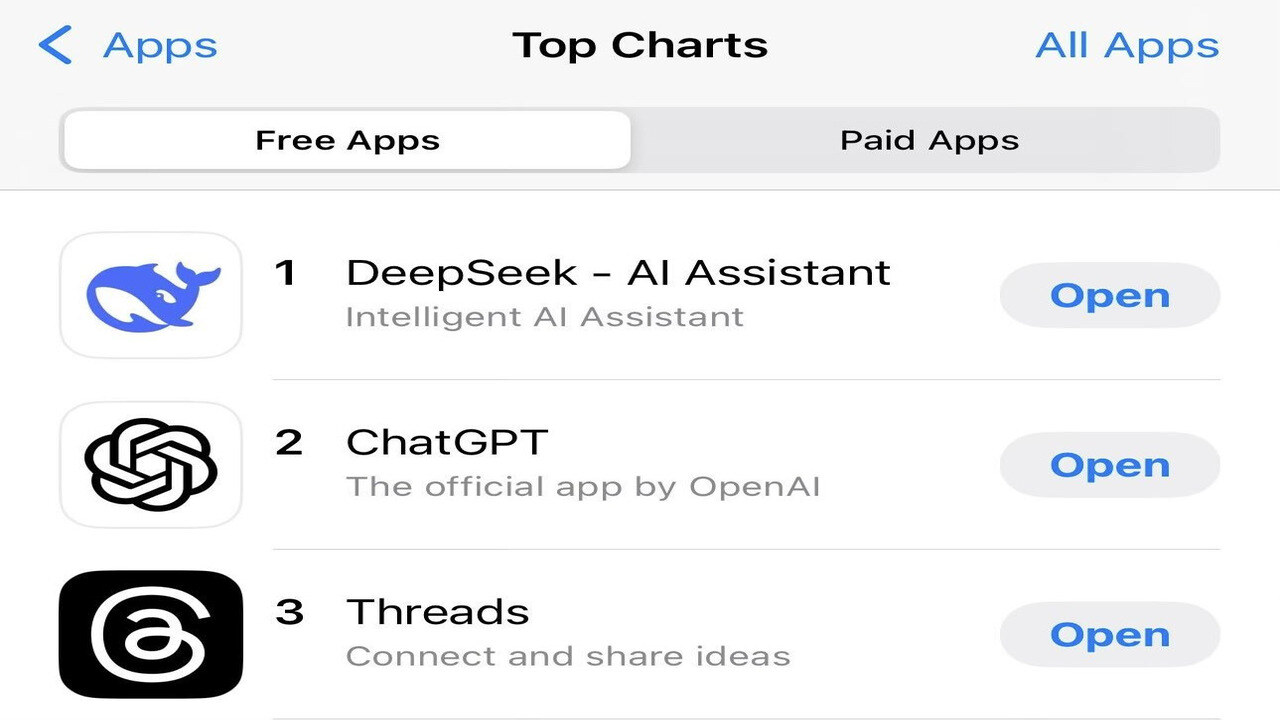
Thanks to its hybrid structure and MoE system, DeepSeek V3.1 runs at a much lower cost than its competitors. According to independent tests conducted in China, the model offers processing costs up to 40 times cheaper than some rivals. This creates a major accessibility advantage, especially for small companies and individual developers.
DeepSeek V3.1 Update: The Terminus Version
In September 2025, DeepSeek updated the V3.1 model as "DeepSeek V3.1-Terminus" and introduced significant improvements aimed at increasing the model's performance and stability. Rather than a completely new model, this update stands out as an optimized version of the existing V3.1 architecture.
With the Terminus version, notable improvements were made especially in language processing and output quality. Language mix-ups and inconsistent expressions that occasionally appeared in earlier versions were largely eliminated, and the model was made to produce more fluent and accurate text.
Another important aspect of the update is the improvement in agent capabilities. Performance gains have been observed especially in systems used for code generation and information retrieval. This shows that DeepSeek V3.1 has become not just a text generation tool, but an AI system capable of carrying out more advanced tasks.
In addition, the Terminus version increased the model's overall stability, allowing it to produce more consistent and reliable outputs. These improvements significantly increase DeepSeek's appeal, especially for enterprise use and production environments.
In short, the DeepSeek V3.1-Terminus update offers significant improvements in performance, accuracy and reliability without changing the model's technical foundation.
Use Cases for the DeepSeek V3.1 Open-Source AI Model
Software Development: Writing code, debugging, explaining algorithms. |
Academic Work: Summarizing papers, literature reviews, thesis preparation. |
Content Production: News writing, scriptwriting, creative stories. |
Enterprise Integrations: Customer support chatbots, business process automation. |
Research: Big data analysis, bioinformatics, social science research. |
In short, DeepSeek V3.1 is a powerful tool not only for technology enthusiasts, but also for industrial solutions and academic research.
DeepSeek V3.1 Pricing and Plans
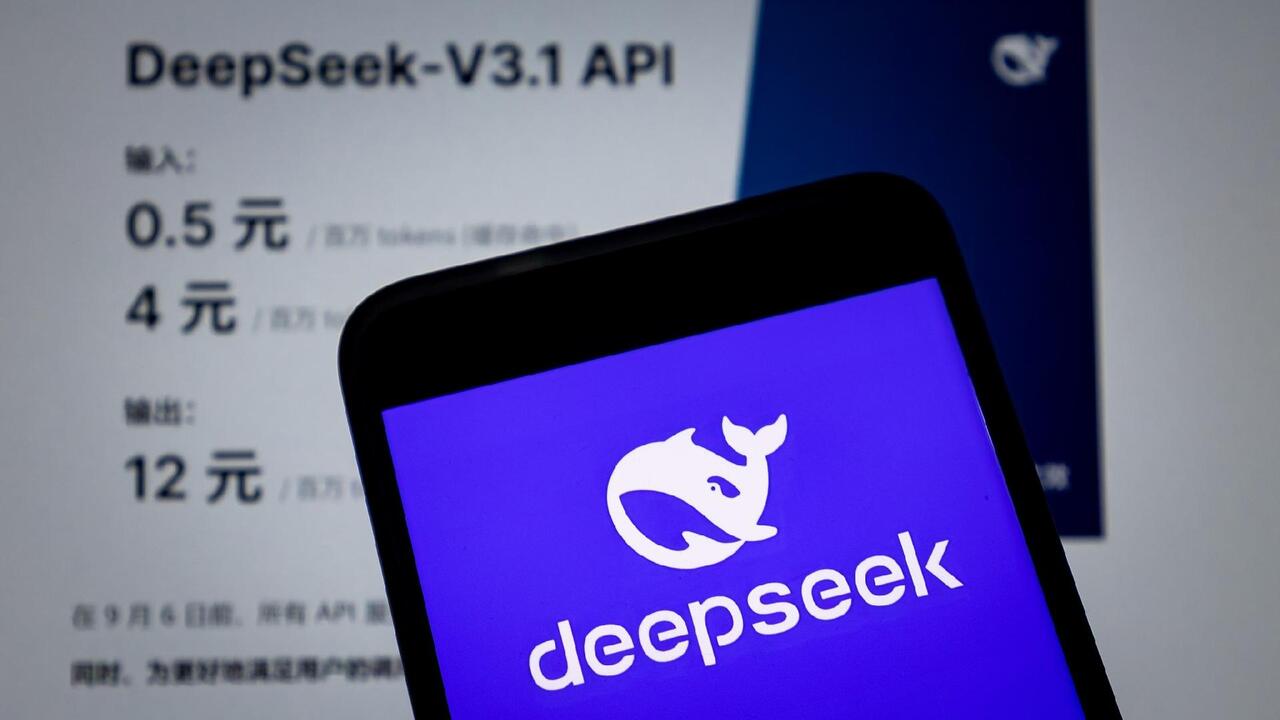
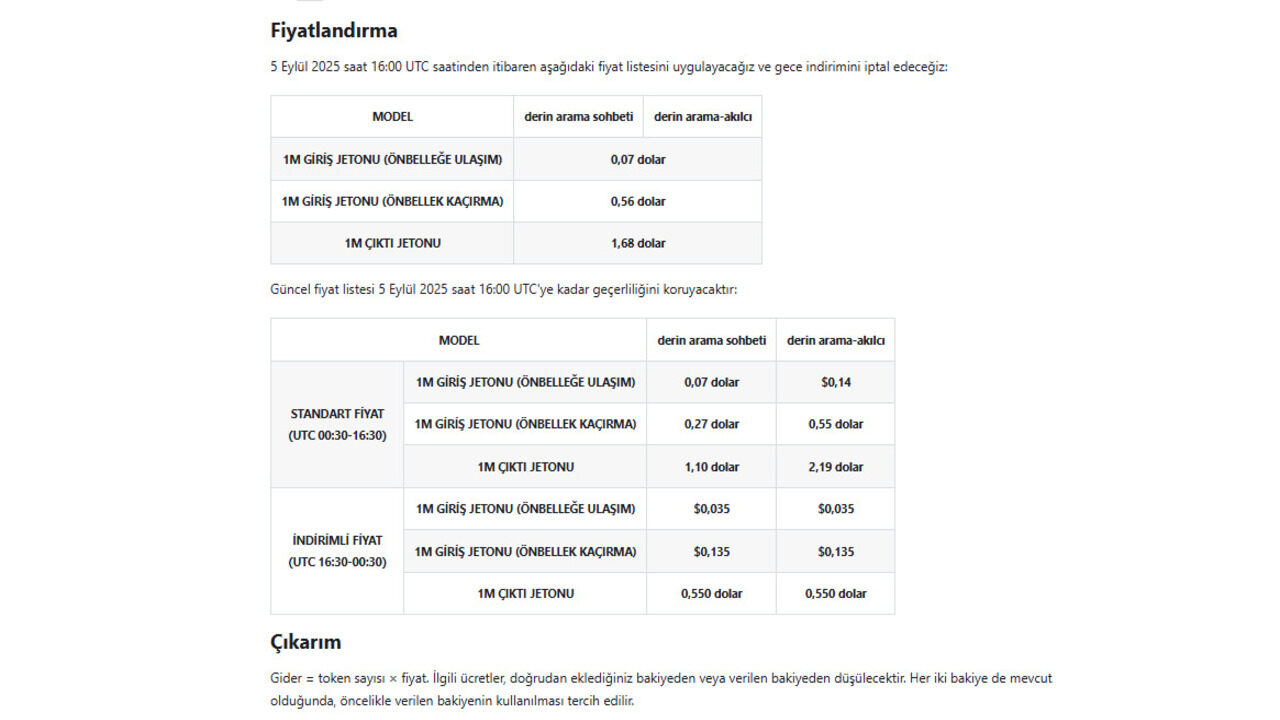
DeepSeek V3.1 offers a flexible and transparent pricing system designed for different user needs. The cost of the model is calculated based on both the text sent by the user (input token) and the responses produced by the model (output token).
A cache hit means that a previously processed query is reused, which lowers the cost. A cache miss means that new processing is required each time, which raises the cost.
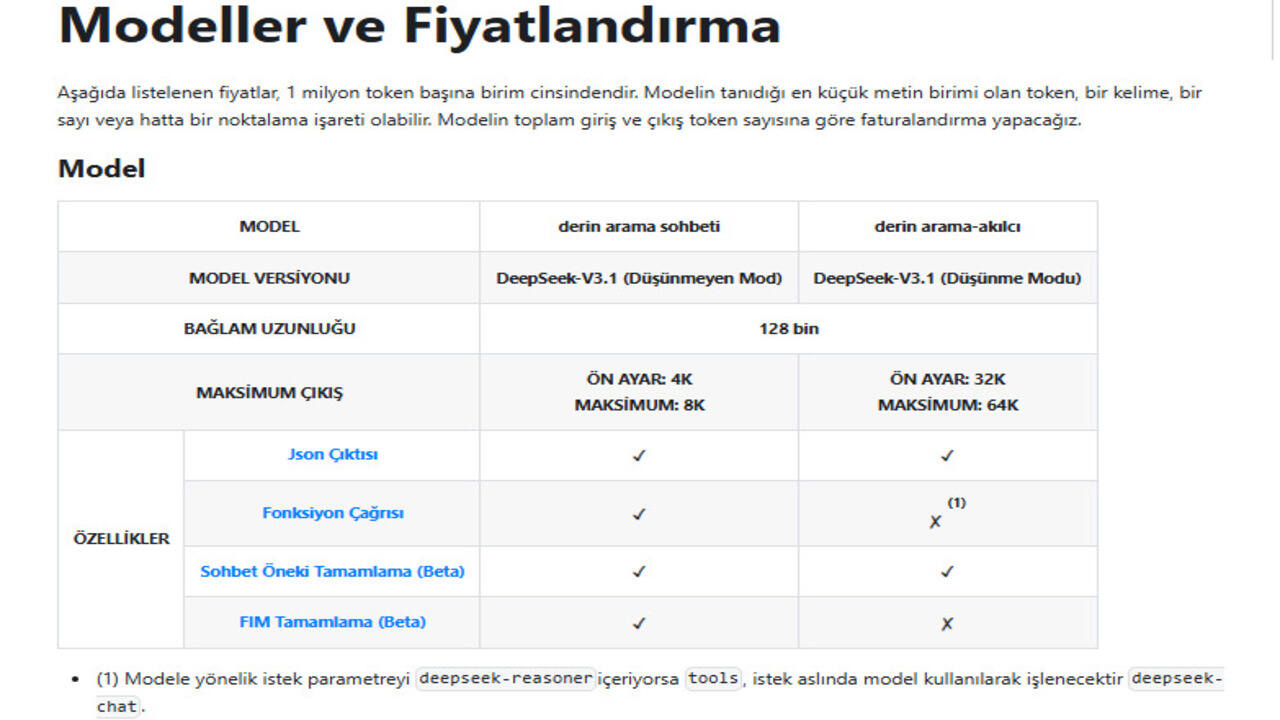
DeepSeek V3.1 Pricing
According to the pricing:
DeepSeek Chat:
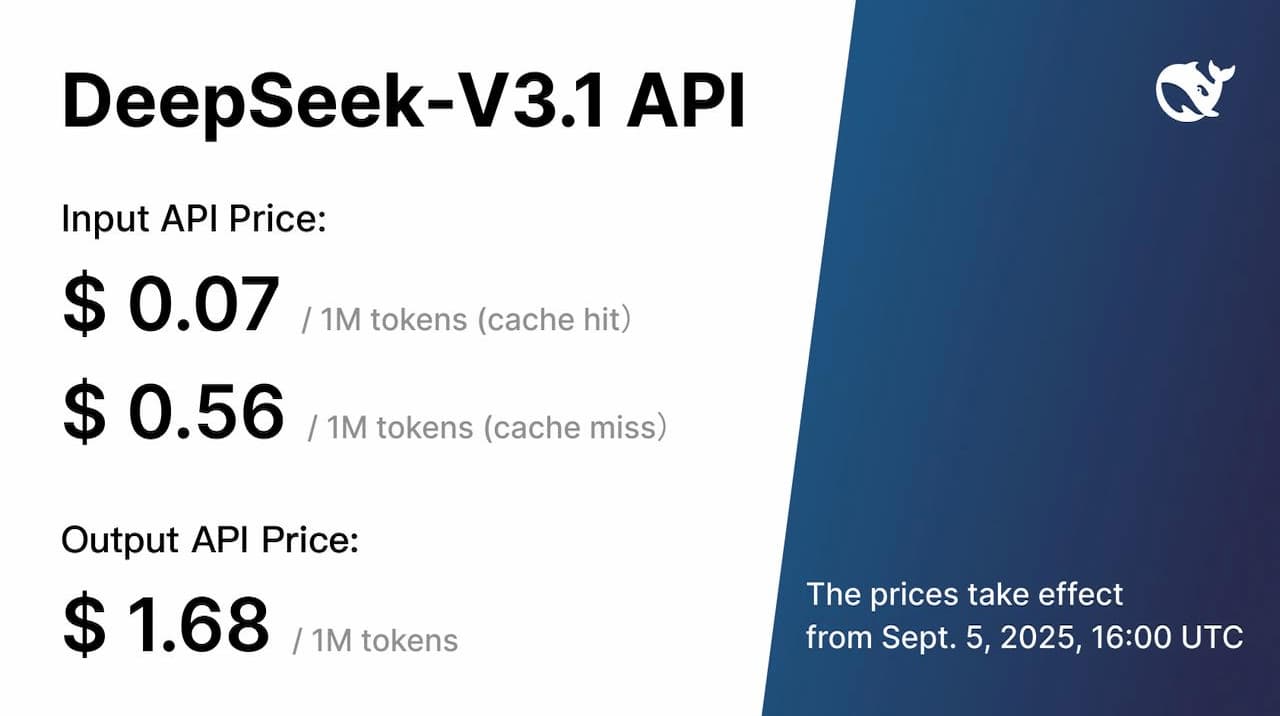
Input token (cache hit) = $0.07 / 1M tokens
Input token (cache miss) = $0.56 / 1M tokens
Output token = $1.68 / 1M tokens
DeepSeek-Akıllı:
Pricing details have not yet been announced; users are advised to follow updates.
Key Concepts and Cost Calculation
Input Token: The text, question or command that the user sends to the model.
Output Token: The response text produced by the model.
Cache Hit: Reuse of a previously processed query → provides a cost advantage.
Cache Miss: New processing is required → higher cost.
Cost Calculation Formula: Total Cost = (Number of Input Tokens × Input Token Price) + (Number of Output Tokens × Output Token Price)
Payment Options
DeepSeek makes it easy for users to manage their payments:
Charges are deducted from the user's added or promotional balance; if there is a promotional balance, it is used first.
Payment methods include credit card, bank transfer and PayPal.
An invoice-based payment option is available for enterprise customers.
For detailed information and the most current pricing plans, it is recommended to follow DeepSeek's official website.
DeepSeek V3.1 and Its Competitors
DeepSeek V3.1 is not only a strong model on its own; it also offers several advantages when compared with existing large language models (LLMs) and AI systems. Its best-known competitors include OpenAI's GPT-4 series, Anthropic's Claude models and Meta's LLaMA models.
Use Cases
DeepSeek V3.1: Academic research, long text analysis, creative writing, coding, enterprise chatbots.
GPT-4 / Claude: General-purpose conversation, text generation, coding, research. However, DeepSeek has the advantage for long contexts and low-cost local use.
LLaMA: Mainly focused on research and experimental use, with limited commercial API integration.
Performance Comparison
Aider Coding Benchmark: DeepSeek V3.1 scored 1% higher than Claude Opus 4. This indicates an advantage especially in coding and algorithm problem-solving.
Long Text Processing: DeepSeek's 128K token context window allows it to process much longer texts at once compared with the 32–64K token capacity of GPT-4 and Claude. This is a major advantage for long datasets in law, academia and software projects.
Natural Language Understanding and Generation: In NLP tasks (text summarization, translation, sentiment analysis), DeepSeek V3.1 has accuracy rates similar to its rivals, but it runs faster and more energy-efficiently.
Cost Comparison
One of DeepSeek V3.1's strongest advantages is cost. For API usage, it results in processing costs 20–40 times lower than OpenAI and Anthropic models.
Because the Think mode and MoE architecture do not run unnecessary parameters, energy consumption decreases. This provides significant savings for businesses.
Flexibility and Customization
Being open source is one of the biggest features that sets DeepSeek apart from its competitors. Access to the model's code is possible through Hugging Face and GitHub, which enables customization and local use.
Competing models are generally closed source and accessible only through an API. This can be limiting for some developers and researchers.
Pros and Cons
Pros | Cons |
Open Source – The model is publicly available under the MIT license. This allows developers to inspect and customize it transparently. | Security Risks – Open-source models can be used by malicious actors for disinformation or cyberattacks. |
Cost Advantage – 20–40 times cheaper than competitors, and completely free when run locally. | Hardware Requirements – Running it locally requires powerful GPUs and large memory. |
Hybrid Architecture – Can be adapted to different scenarios with think and non-think modes. | Language Support Issues – In languages other than English, especially Turkish and regional languages, it is not as strong as OpenAI models. |
High Performance – In benchmark tests, it outperforms Claude and GPT-based competitors. | Regulatory Uncertainty – Because open-source AI is hard to control, government regulation debates may increase. |
Broad Context Capacity – With 128K token support, it can process text equivalent to 400 pages at once. | Slowness of Think Mode – Although it produces more accurate answers, think mode can cause delays in real-time applications. |
Flexible Use Cases – Can be used across a very wide range of areas, including software development, academia, journalism and customer service. |
|
OpenAI: ChatGPT Erotik İçerik Sunmaya Hazırlanıyor


Tasarım Yapay Zeka ile Nasıl Kullanılır?


