


Gemini API Brings a New Era to Deep Research
Automatically translated
 Writer
Google is taking its position in artificial intelligence a step further. With the Gemini API and the Deep Research Agent approach integrated into it, it has activated advanced development tools.

Especially in projects with heavy data flows, academic studies and corporate analysis processes, research is shifting from classic methods toward autonomous AI agents. Google will try to multiply deep research capabilities with AI agents using the Gemini API.
What Is Gemini 2.0 API?
Gemini 2.0 API is a next-generation interface that makes Google's multimodal large language model infrastructure available to developers. Basically, the API works with high accuracy on structured data such as text, tables or code, and stands out with features such as multi-step reasoning. The main goal of this release is to turn the model from one that only generates answers into one that conducts research and organizes complex research reports from start to finish. Accordingly, this development lays the groundwork for the concept of Deep Research.
What Is a Deep Research Agent and What Is It Used For?
It is described as an AI agent that runs on the Gemini API and carries out research tasks in complex settings. Put simply, these agents break the research goals given by users into parts and scan for the right information. They also separate contradictory statements and report results while following a more consistent working principle. The areas where it offers a significant advantage are:
- Academic literature reviews
- Market and competitive analyses
- Technical documentation summaries
- Regulatory and legislative research
Generally speaking, it goes beyond the question-and-answer loop and sets up a multi-stage research cycle.
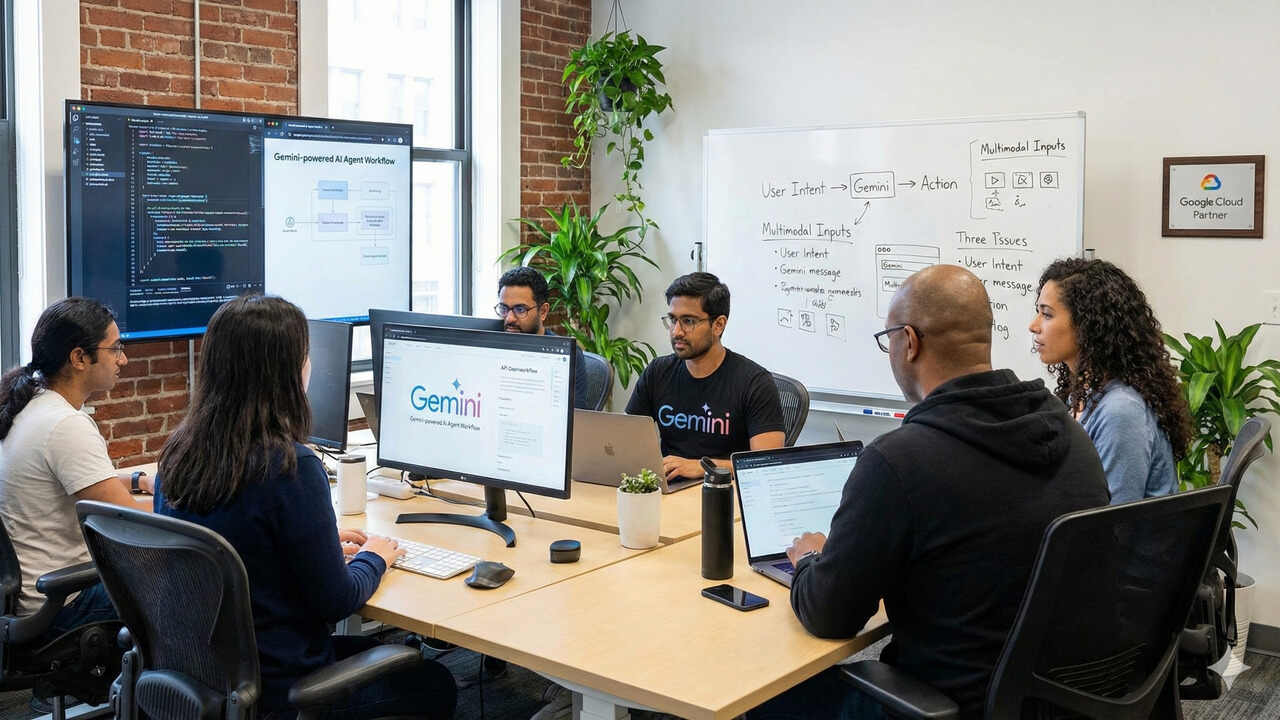
Real-Time Data with Google Search Grounding
The most important feature of Google Gemini is its Google Search Grounding support. Thanks to it, the model does not stop at producing output based on the client alone. It also generates answers based on the best web results, with current and verifiable information. As a result, scalability in software processes is increasing for enterprise users. In sectors such as finance and healthcare, the major feature that sets the Gemini API apart from others is its Grounding structure. Basically, thanks to this structure, which works on the logic of accurate information, many of the troubling problems in the AI world will be largely eliminated. Generally speaking, the issues it addresses are:
- Fabricated information
- Outdated data
- Unsourced claims
Using the Gemini API with Python
As is well known, Python is one of the most widely used languages in the software industry. Combining these two powerful technologies makes it possible to build deep research agents. This structure helps data scientists and engineers move to production faster by enabling quick previews. Essentially, Google Search Grounding is activated through this setup, and its effect is put to use. It also contributes proportionally to the analysis of large data sets.
The general advantages of the Gemini API are shown below;
| Title | Description |
|---|---|
| Deep Research Capability | With the Deep Research Agent, it analyzes multi-source data, makes sense of long documents and produces contextual results. |
| Google Search Grounding | Makes responses current and verifiable with live Google Search data. Reduces the risk of hallucination. |
| Advanced Reasoning (Gemini 2.0) | Performs chain-of-thought reasoning and multi-step analysis for complex questions. |
| AI Agent Development | Autonomous research agents, reporting bots and decision support systems can be developed. |
| Python Integration | Provides fast integration into data science, automation and backend projects via the Python SDK. |
| Scalable API Structure | Offers flexible use, from small prototypes to enterprise systems. |
| Source Verification | Shows which sources responses are based on, providing enterprise-grade trust. |
| Time and Cost Savings | Improves operational efficiency by automating manual research processes. |
| Multilingual Support | Supports many languages, including Turkish, so it can be used in global projects. |
| Enterprise Readiness | Offers secure use in sensitive fields such as law, finance, academia and R&D. |

Gemini API Use Cases
Sectors where the Gemini API and the Deep Research Agent are likely to make a difference when used together;
- Journalism and news production: Sourced, fast and consistent content production. Of course, it should not be forgotten that the sources are entered by people. It can be seen as an important step in terms of information consistency.
- Market and competitor research: Reporting based on current data. It can be seen as an application that could provide considerable benefits for business impact. Companies can be expected to find great convenience in the data collection and reporting services they need in every period.
- Academic and technical documentation: Referenced summaries and comparisons. It can make the process of finding documents in academia easier.
- Corporate decision support systems: Thanks to data-driven insight generation, it is one of its major strengths that it can be used to influence companies' strategic commitments, directly or indirectly.
WriterFlux.2 Nedir? Yeni Nesil Görsel Üretim Modeli


Dijital Estetiğin Hız Rejimi: Google Nano Banana 2 Flash Nedir?